Study Room Interior Design: Practical Ideas for Small Spaces
Introduction
Good study room interior design is not just about making a room look aesthetic. It should also make studying easier, reduce distractions, and give you a comfortable place to spend long hours. In smaller Indian homes, however, creating that balance can be difficult.
You may have a small bedroom, limited storage, poor lighting, or even just one corner available for studying. Fortunately, you don’t need an expensive renovation to solve these problems.
With the right layout, lighting, storage, and a few personal touches, even a small space can become a comfortable and productive study area. Recent Indian interior-design guidance also places strong emphasis on compact furniture, vertical storage, natural light, and practical layouts rather than simply adding more decoration.
Why Study Room Interior Design Matters
Your surroundings can influence how easy it feels to concentrate.
A crowded desk can make it harder to find your books. Poor lighting can make reading uncomfortable. Meanwhile, an uncomfortable chair can become a problem during longer study sessions.
Therefore, good study room interior design should solve practical problems first.
Think about three things:
Focus — Can you study without constant distractions?
Comfort — Can you sit and work comfortably?
Organisation — Can you easily find what you need?
Once these are working, you can focus on making the room look better.
1. Start With the Right Study Room Layout
Before buying furniture, measure the room.
This simple step can prevent one of the most common mistakes: buying a desk that makes the entire room feel cramped.
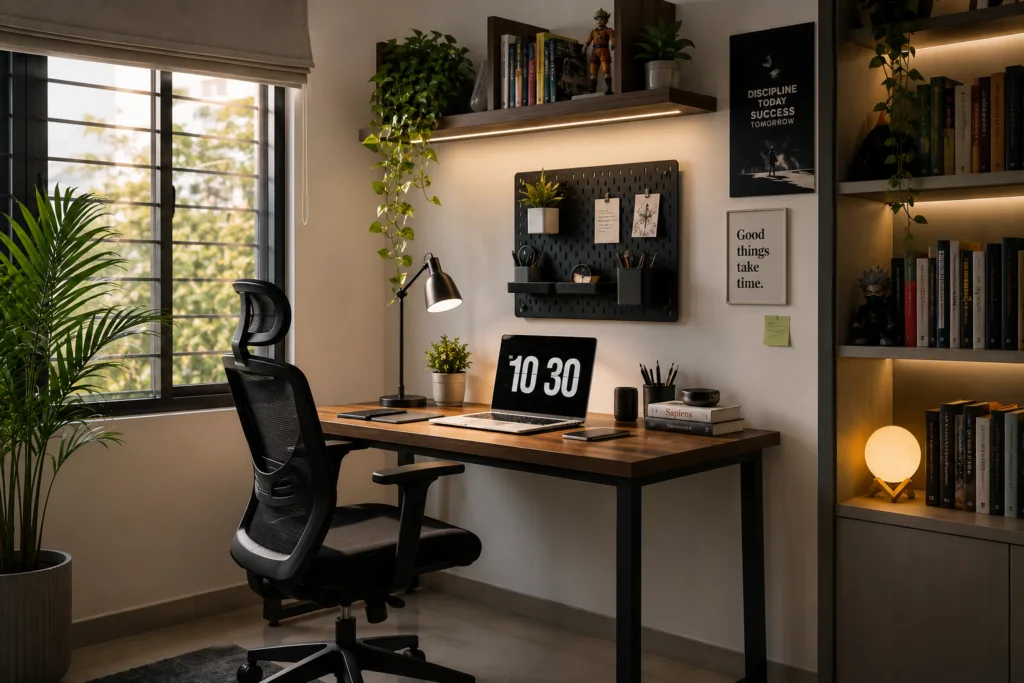
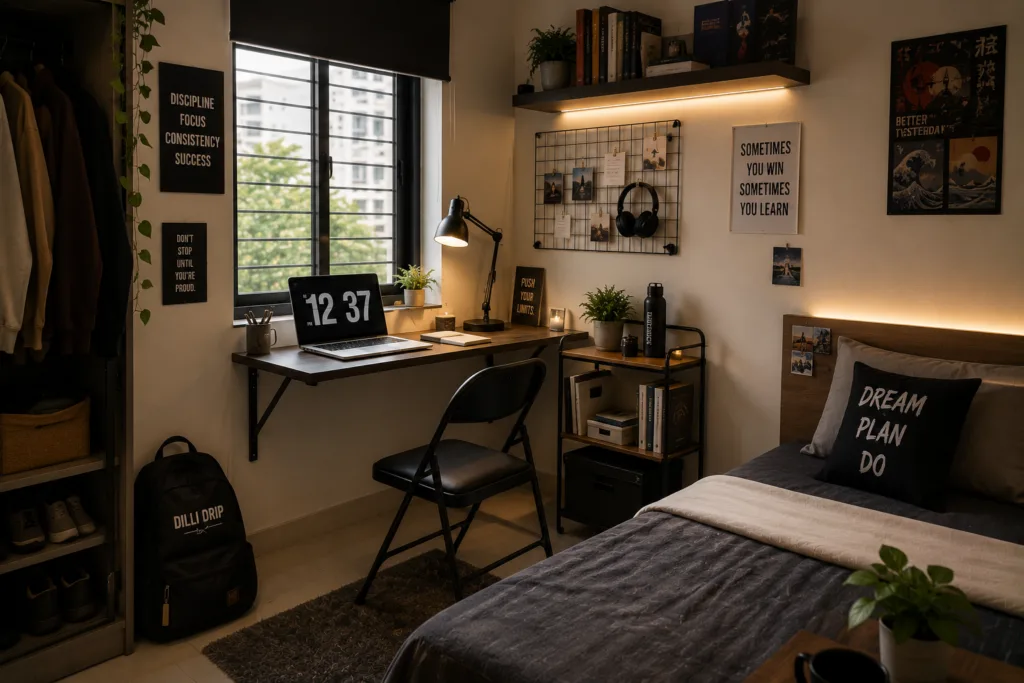
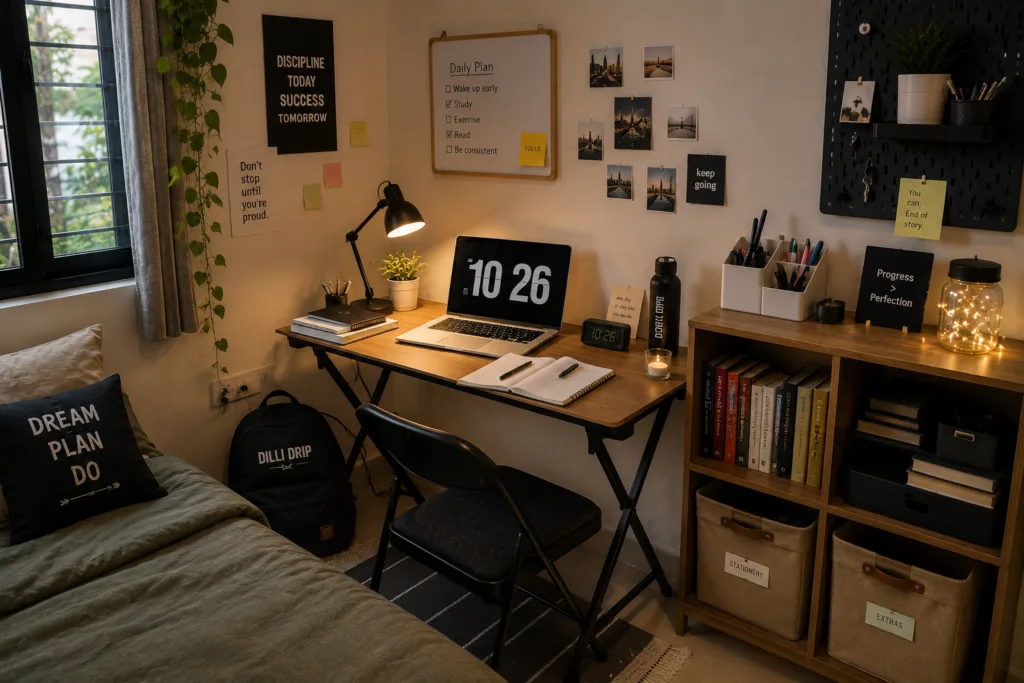
For a small room, consider a wall-mounted or compact desk. A corner can also become a useful study zone without taking up much floor space. Foldable desks are another practical option for bedrooms, rental homes, and shared spaces.
Keep the Walking Space Clear
Don’t push furniture into every available corner.
Leave enough space to move around comfortably. A room usually feels larger when there is some empty space between the major pieces of furniture.
2. Use Natural Light Before Adding More Decor
Lighting is one of the most important parts of study room interior design.
If possible, position your desk near a window so you can use natural daylight. However, avoid placing your screen directly where sunlight creates strong glare.
A desk positioned beside rather than directly in front of a window can provide useful daylight while keeping the screen easier to see.
Add a Proper Desk Lamp
Natural light won’t be enough in the evening.
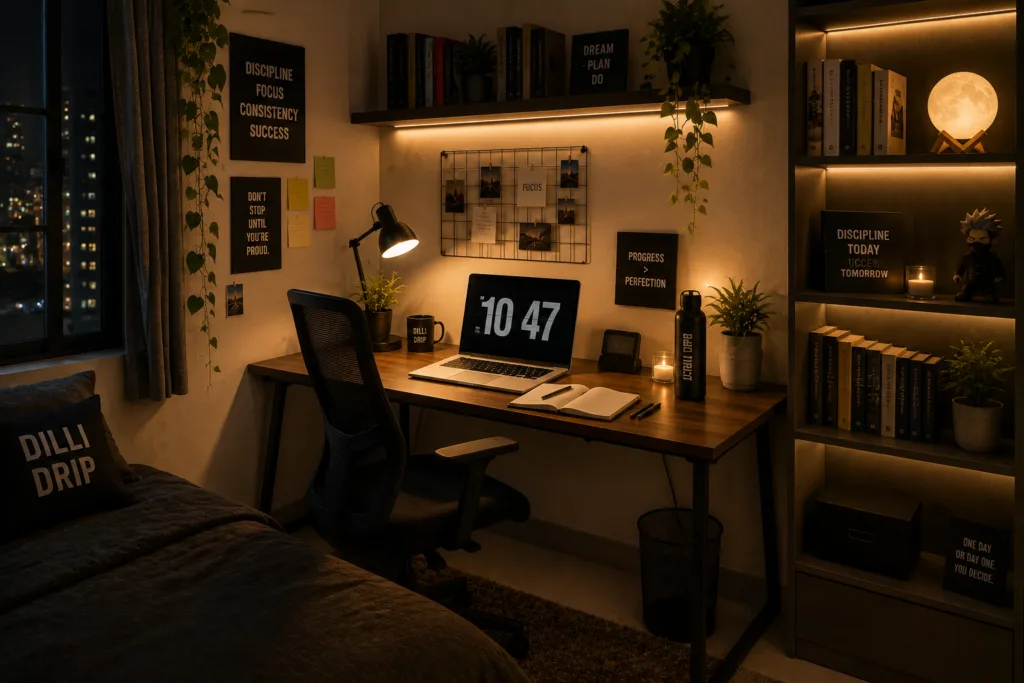
Use a focused desk lamp alongside your main room lighting. Layered lighting can make a small study area more comfortable and functional.
3. Choose Colours That Keep the Room Calm
You don’t need complicated wall designs to create an attractive study room.
Light shades such as:
Off-white
Cream
Light grey
Soft beige
Pale blue
Muted green
can help create a calm and open feeling.
However, don’t assume that every wall needs to be white.
You can add personality with one darker accent wall, artwork, a corkboard, or a few carefully chosen decorative pieces.
The goal is balance.
4. Use Vertical Storage in Small Rooms
Storage becomes difficult when floor space is limited.
Instead of adding another large cabinet, look upward.
Floating shelves, tall bookcases, wall organisers, pegboards, and mounted storage can use vertical space without consuming much floor area.
Keep frequently used books and stationery within easy reach.
Less frequently used items can go on higher shelves.
This simple system keeps your desk cleaner without requiring a huge storage unit.
Comfortable Essentials for Long Study Days
A productive study environment isn’t only about the room. Comfort matters throughout the day too.
For long college or study sessions, choose relaxed everyday clothing that gives you freedom of movement and doesn’t make you constantly adjust what you’re wearing.
₹1,299Original price was: ₹1,299.₹799Current price is: ₹799. Incl. of taxes
S - Out of StockS
MM
LL
XLXL
XXL - Out of StockXXL
5. Make Your Desk a Distraction-Free Zone
A beautiful desk can still be a terrible study desk.
If it is covered with random objects, tangled cables, snacks, cosmetics, gaming accessories, and unused stationery, your attention can quickly move away from your work.
Keep only your everyday essentials on the desk.
A simple setup could include:
Laptop or books
Desk lamp
Notebook
Pen holder
Water bottle
Small plant
Everything else can go into drawers or shelves.
Research-backed interior guidance also emphasises organisation and clutter control as important elements of productive study spaces.
6. Add Personality Without Overcrowding
This is where your study room can become genuinely yours.
You could add:
A small moodboard
Posters
Polaroid photographs
A corkboard
One or two plants
Minimal artwork
A small bookshelf
A favourite collectible
If you’re a Gen Z student, your room doesn’t have to look like a showroom.
It should reflect your personality.
The important part is to avoid covering every wall and surface. Recent interior guidance specifically warns against overcrowding rooms with decor simply because an image looks good on Instagram or Pinterest.
Study Room Interior Design for Small Bedrooms
You don’t necessarily need a separate room.
A bedroom corner can become an effective study area if you separate it visually from the sleeping area.
For example, place a compact desk against one wall and use shelves, lighting, or a different wall colour to define the study zone.
This approach is especially useful for students living in apartments, hostels, PGs, or shared homes.
7. Choose Furniture Based on Your Space
Large furniture can make a small study room feel uncomfortable.
Instead, choose pieces according to the room’s actual dimensions.
A compact desk with drawers may be more useful than a large table. Similarly, a slim bookshelf can provide storage without blocking movement.
Don’t Sacrifice Comfort
Small furniture doesn’t mean uncomfortable furniture.
Choose a chair that supports your back and allows you to sit comfortably for your usual study sessions.
A visually beautiful room isn’t useful if you can’t comfortably sit there for an hour.
8. Hide the Cable Mess
This is a small change that can make a surprisingly big difference.
Use cable clips, a cable tray, or simple organisers to keep charging cables together.
Your desk immediately looks cleaner.
You can also place your extension board underneath the desk instead of leaving it on the floor.
9. Create a Study Setup on a Budget
You don’t need to buy everything at once.
Start with the essentials:
Comfortable desk
Good chair
Reliable lighting
Basic storage
Organised workspace
Then add decorative elements gradually.
You can also reuse furniture you already own. A simple wooden table can work perfectly well if its height and size are comfortable.
The best study room interior design is not necessarily the most expensive one. It is the one that works for your daily routine.
10. Make the Room Work for Your Routine
Your study room should match the way you actually study.
If you use a laptop, prioritise desk depth and cable management.
If you read physical books, keep your most-used books nearby.
If you take online classes, make sure the desk has enough space for your laptop and notebook.
If you study late at night, invest more in lighting.
In other words, design the room around your habits rather than copying somebody else’s Pinterest setup.
Build Your Everyday College Rotation
Your study space should help you feel comfortable and confident throughout a long college day.
Dilli Drip’s relaxed streetwear is designed for everyday movement, making it easy to transition from studying at home to college, cafés, or casual hangouts.
₹1,299Original price was: ₹1,299.₹799Current price is: ₹799. Incl. of taxes
S - Out of StockS
MM
LL
XLXL
XXL - Out of StockXXL
Common Study Room Design Mistakes
Buying Furniture Before Measuring
Always measure first.
Otherwise, your desk or storage unit may dominate the room.
Adding Too Much Decoration
A few meaningful pieces look better than a wall covered with random decor.
Ignoring Lighting
A beautiful desk is useless if the lighting makes studying uncomfortable.
Copying Pinterest Exactly
Use online images for inspiration, but adapt them to your room size, budget, climate, and daily routine.
Forgetting Storage
Without a storage system, even a beautiful study room can become messy within a few days.
Frequently Asked Questions
How can I design a study room in a small space?
Use a compact or wall-mounted desk, vertical storage, good lighting, and minimal furniture. You can also convert an unused bedroom corner into a study zone.
What colour is best for a study room?
Light neutral shades, soft blue, and muted green can create a calm environment. Choose a colour that you find comfortable rather than following a trend
How important is lighting?
Very important. Combine natural daylight with appropriate task and ambient lighting to create a comfortable workspace.
How can I make my study room aesthetic on a budget?
Start with organisation, lighting, and a clean colour palette. Then add inexpensive personal touches such as posters, plants, photographs, or a moodboard.
Do I need a separate study room?
No. A well-planned study corner can work extremely well, especially in smaller homes or shared rooms.
Conclusion
The best study room interior design is not about creating the most expensive or Instagram-perfect room.
It is about creating a space that makes your everyday routine easier.
Start with the layout. Then improve lighting, storage, furniture, and organisation. Once those basics work, add personality through artwork, plants, photographs, and other details that make the space feel like your own.
Whether you’re a school student, college student, freelancer, or someone working from home, you don’t need a huge room to create a productive environment.
Start small, remove what you don’t need, and build the space around the way you actually live and study.